
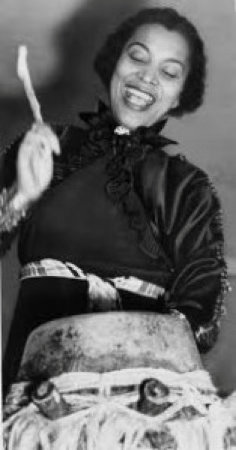
The Zora Neale Hurston Award acknowledges an anthropologist who has shown mentoring, service and scholarship within historically underserved populations of the South.
Established in 2006, the Hurston Award recognizes those SAS members who have made exceptional contributions to anthropology and the public good by exemplifying the skills of the discipline for the benefit of others.
This award is presented specifically to a senior scholar for their works in the form of scholarship, applied research, multi-media (book, film, articles), and/or organization and mobilization of people to provide meaningful services to communities.
Zora Neale Hurston (January 2,1891- January 28,1960) knew the adversity, pain, and challenges that cut across issues of ethnicity, class, and gender. At a time when most African Americans were denied entry into institutions of higher education and intellectual circles, Hurston’s talent and drive gained her access. Born and raised in Florida, she studied folklore at Howard University and Barnard College (her institution of matriculation, B.A. 1928). From 1928-1932, she studied anthropology at Columbia University with Franz Boas. Ms. Hurston was a writer and leader in the Harlem Renaissance during the 1920’s and 1930’s. She was a member of American Folklore Society, American Anthropological Society, American Ethnological Society, and Zeta Phi Beta. She received a Guggenheim Fellowship, 1936 and 1938; Litt.D. from Morgan State College, 1939; Anisfield-Wolf Book Award in Race Relations, 1943; Howard University’s Distinguished Alumni Award, 1943; Bethune-Cookman College Award for Education and Human Relations.
She wrote seven novels of authentic Black experience of her era, including Their Eyes Were Watching God, and fifty articles, short stories and plays. Her work with Alan Lomax on folklore in the South is highly valued today. Alice Walker claimed Hurston as a “literary ancestor” in the 1970’s and placed a tombstone on her unmarked grave which reads “Zora Neale Hurston, A Genius of the South.”
This award, in her honor, pays tribute to her many lasting contributions to anthropology and Southern studies and is a testament to her enduring spirit, courage, and ability to make ethnographic work and folklore meaningful to the public.
Each nomination should include the following:
Contextualization of the nominee’s work should address the following questions:
Each nomination packet must:
Please send nominations with supporting materials electronically to the President of the Southern Anthropological Society (see Current Officers of SAS).
The selection review committee consists of two appointed members of the Southern Anthropological Society Zora Neale Hurston Award Committee and the Zora Neale Hurston Award Chair.
The annual deadline for receipt of nomination materials is November 1st. Please note that supporting materials will not be returned. The Zora Neale Hurston Award may not be annual and will be awarded only if the committee deems nominees of merit.
Recipients will be contacted by January 1st so that they may make arrangements to attend the annual meeting in the spring. The Hurston Award carries a $500 stipend.
Send nominations with supporting materials electronically to the President of the Southern Anthropological Society.
Marjorie Snipes, Ph.D.
President, Southern Anthropological Society
University of West Georgia | [email protected]
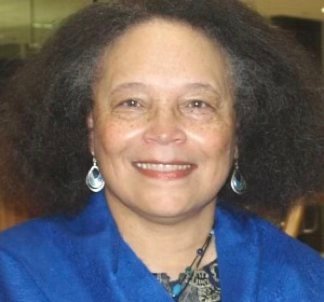
Faye V. Harrison is a social/political anthropologist who specializes in the study of social inequalities and the politics that emerge in response to them. She received her B.A. from Brown University (1974) and her M.A. (1977) and Ph.D. (1982) from Stanford University. A former Lindsay Young Professor at the University of Tennessee-Knoxville, she is currently Professor of African American Studies and Anthropology at the University of Illinois at Urbana-Champaign. For more than 20 years, she has sought to balance her commitment to educating students; rendering service to her university and professional communities as well as to the wider public; and producing original research and critical scholarship.
Her research addresses the social and economic disparities of race, gender, and class, and the ways in which they interact and operate simultaneously in everyday life. She has written on the underground economy and political violence in Jamaica; the impact of the International Monetary Fund’s structural adjustment program on everyday life in an impoverished Jamaican slum; the effects of the Special Period and the US Embargo on Afro-Cubans; and the politics of racial, gender, and class diversity in higher education and in the history of anthropology. She has done extensive field research in the U.S., the U.K., and the Caribbean. Her research interests and professional activities have also taken her to many other parts of the world, including Cuba, Denmark, Mexico, South Africa, India, and China. Her current research examines modes of political activism that approach racism and sexism as human rights violations outlawed by international law. She is especially interested in understanding the transnational alliances that activists are building in this effort.
She has published extensively in journals and anthologies. She is the editor of seven books, including Decolonizing Anthropology (1991, 1997), Contemporary Issues Forum: Race and Racism (1998), African-American Pioneers in Anthropology (1999), Resisting Racism and Xenophobia: Global Perspectives on Race, Gender, and Human Rights (2005), and Outsider Within: Reworking Anthropology in the Global Age (2008) in which she offers her own vision of what it will take to reinvent anthropology for a truly post-colonial mode of social analysis and praxis.
She has been active in her profession at both the national and international levels. She has chaired the International Union of Anthropological and Ethnological Sciences’ Commission on the Anthropology of Women and has served on the IUAES Executive Committee. She is also past president of the Association of Black Anthropologists, and she served two terms on the Executive Committee (1990-91, 1999-01) of the American Anthropological Association (AAA). She was also a member of the key Advisory Group for the AAA’s “Understanding Race” public education initiative, which involved organizing a major museum exhibit that traveled nationwide.
She has been the recipient of several honors acknowledging her accomplishments in teaching, academic citizenship, the promotion of cultural diversity, and scholarship. In 2004, she received the Society for the Anthropology of North America’s (SANA) Prize for Distinguished Contributions to the Critical Study of North America.
It is with great honor that the Southern Anthropological Society bestowed Faye with the 2007 Zora Neale Hurston Award. This award goes to a Southern anthropologist who emulates the legacy of Zora Neale Hurston by mentoring, engaging in service and scholarship using anthropological tools for critically engaging and negotiating cultural diversity in ethically and socially responsible ways.
In Faye’s words, “I myself think that something can be said for valuing a balanced career as anthropologist scholar and citizen.“